
Table of Contents
In the comment sections of beauty forums and social media, we often see this question that is both funny and anxiety-inducing: “I want to use nasal strips to improve my sleep, but I’ve heard that if I use them for a long time, my nose will become bigger and wider. Is that true?”
This concern is not unfounded. When you look in the mirror every night and see that small piece of tape forcefully pulling your nostrils apart, the visual “expansion” is indeed very impactful. For many beauty enthusiasts, especially women, sacrificing a delicate nose shape to cure snoring is simply an unacceptable “disfiguring” price to pay.
Let’s debunk the wide nose myth from an anatomical and physical perspective. Rest assured, your nose is far more “stubborn” than you think.
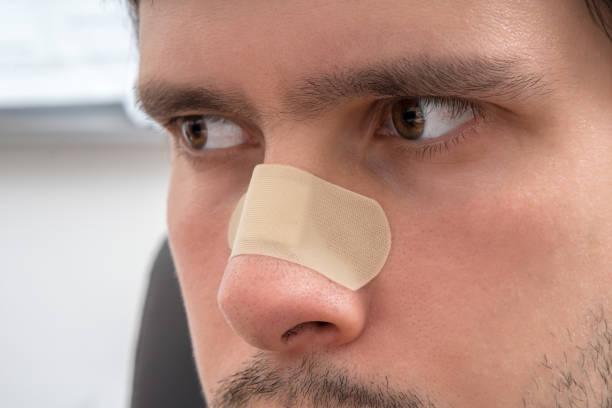
Anatomical Truth: Your Nose Isn’t Play-Doh
To understand why nasal strips change nose shape, we first need to understand what the nose’s “foundation” is made of. Our nose isn’t a lump of clay that can be kneaded and deformed at will; it has a tightly structured support system.
The defensive line of bones and cartilage
The upper part of the nose (the bridge of the nose) is a hard bone made up of the nasal bone. This structure is completely formed after adulthood, and no external patch can change its width except for violent external impacts (such as fractures) or plastic surgery (osteotomy).
The lower part of the nose (tip and alar) is supported by cartilage, mainly including the alar cartilage and lateral nasal cartilage. While cartilage is elastic, it also possesses a strong “shape memory” function. The pulling force generated by nasal strips is typically between 20 g and 30 g. This force is enough to temporarily stretch soft tissue to aid airflow, but it’s futile for attempting to reshape the cartilage structure.
The essence of elasticity is “rebound.”
Imagine your earlobe. You can fold, stretch, or even twist it with your hand, but it immediately returns to its original shape once you let go. The same applies to the alar cartilage. Nasal strips use physical tension at night to counteract the inward force of the cartilage, but this is only a temporary mechanical balance. Once the strip is removed in the morning, the external force disappears, and the cartilage and skin tissue use their inherent bioelasticity to spring back to their original state within seconds.
Why is there the illusion of “widening”?
Since anatomy does not support the claim of “getting bigger,” why do some people still insist that they feel their nose has changed? This usually stems from psychological suggestion and temporary physiological phenomena.
Morning edema effect
Many people experience some degree of facial puffiness upon waking in the morning. This is related to sleeping posture, salt intake, or hormone levels and is unrelated to whether or not you use a nasal strip. If you look in the mirror the moment you peel off the nasal strip, you might experience the illusion of a “swollen nose” due to increased local blood circulation and overall facial swelling. Wash your face, and look again half an hour later; your once-perfect nose will still be there.
Visual adaptation bias
This is similar to wearing a tight hat all day; when you take it off, your scalp feels relieved. Once you get used to the “spacious” feeling of your nostrils being stretched open at night, the sensory difference when you return to normal in the morning might create a psychological bias of excessive focus on your nose shape.
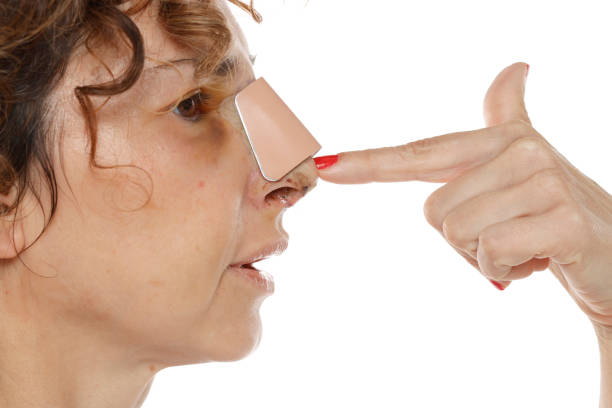
Long-term effects: Skin deserves more attention than bones
While we’ve determined that nasal dilators’ long-term effects do not include alterations to bone structure, this doesn’t mean they’re without side effects. As responsible content creators, we need to discuss the real risks—which typically occur on the skin’s surface, not deep within the structure.
Contact dermatitis and risk of skin laxity
If there’s anything to worry about regarding the side effects of nasal strips, it’s the challenge that prolonged tearing can put on the skin’s stratum corneum.
- Adhesive residue and allergies: Some users may be allergic to acrylic adhesives, which can cause redness and peeling on the bridge of the nose.
- Physical pulling: If you violently tear off nose strips every morning like you’re tearing open a package, it can indeed stretch the skin over time, leading to fine lines.
But this is completely different from “making your nose bigger.” The former is a skin care issue, while the latter is a plastic surgery issue.
Debunking the Myth: The Essential Difference Between This and “Ear Piercing”
People often use the analogy of “ear piercing” to suggest that long-term external force can alter the shape of the human body. This is a classic logical fallacy.
Ear piercing can permanently change the shape of the earlobe because the wearer applies pressure 24 hours a day and continuously increases the weight or diameter, with the aim of breaking the tissue’s original elastic limit.
Using Nasal Strips:
- Short duration: Only worn at night (approximately 8 hours), with a 16-hour “recovery period” during the day.
- Constant force: The pulling force of the nose strip is constant and does not increase over time.
- The direction is different: nose strips lift the surface, rather than penetrating and expanding.
Therefore, unless you plan to wear it 24 hours a day for 10 years and replace it with a stronger industrial-grade spring every week, your nose will not undergo any structural changes as a result.
To breathe, please boldly stick on.
In this age of appearance anxiety, we need to arm ourselves with science. Nasal strips are a safe, noninvasive physical aid. Its sole “ambition” is to help open those few millimeters of your breathing passage so you can get a good night’s sleep. It has no ability, nor any intention, to act as your plastic surgeon.
Don’t let the “wide nose myth” stop you from pursuing quality sleep. The next morning, when you wake up refreshed, you’ll find that your nose hasn’t gotten bigger; in fact, because you slept well, your complexion looks better.
FAQ
1. Will my nose become more congested than before after I stop using nasal strips?
No. The concern about a “rebound effect” is also unnecessary. Nasal strips do not contain any medications (such as decongestants) and do not involve vasoconstriction mechanisms; therefore, they will not cause drug-dependent rhinitis medicamentosa. After discontinuing use, your breathing will simply return to its original state before use and will not worsen.
2. Since teenagers are still developing, will using nasal strips affect the growth of their nasal bones?
Generally, it is safe. Nasal strips for children over 5 years old have even less pulling force. Nasal bone growth is mainly controlled by genetics and growth hormone, and the slight skin pull at night is insufficient to interfere with the growth direction of the bone development plate. However, if there is a severe nasal deformity, it is recommended to consult a pediatrician.
3. Why do I feel dents on both sides of my nose after peeling it off?
This is just a temporary pressure indentation, like the marks left on your ankles from wearing tight stockings. Because the nose strip needs to be pressed firmly at both ends to stay in place, the pressure on the skin creates short-term marks. These indentations usually disappear within 15-30 minutes after waking up, as the skin regains its elasticity and moisture.