
Table of Contents
Breathing, seemingly an everyday activity, is one of the most fundamental life activities. Its manner, depth, and efficiency directly affect the brain’s oxygen supply, the balance of the nervous system, and mental state. In our fast-paced lives, people often overlook the subtle impact of breathing quality on emotions. Even mild nasal congestion or restricted breathing can quietly increase anxiety, irritability, and even fatigue. Nasal strips demonstrate their potential value in this context: by physically improving nasal ventilation, they not only enhance airflow but may also indirectly stabilize the nervous system and mood swings, providing support for daily mental well-being.
Physiological connection between smooth breathing and emotional response
Emotional stability is closely related to breathing quality, and the underlying physiological mechanisms involve oxygen supply, carbon dioxide expulsion, and regulation by the autonomic nervous system. Slow, deep nasal breathing promotes parasympathetic nerve activity, slows heart rate, stabilizes blood pressure, and lowers stress hormone levels. Conversely, shallow breathing or nasal obstruction triggers mild sympathetic nerve activation, putting the body into a state of “micro-tension.” Even if this state does not significantly affect outward behavior, it can manifest emotionally as anxiety or irritability.
When airflow is obstructed, the brain’s perception of oxygen supply changes slightly, potentially leading to subtle emotional instability. Research shows that good nasal ventilation can optimize oxygen distribution, reduce respiratory stress responses, and thus improve emotional resilience. The interaction between the airflow and nervous system is particularly crucial in this process: unobstructed nasal passages not only improve airflow but also regulate the autonomic nervous system through neural reflex pathways, bringing psychological balance closer to the heart.

Potential auxiliary role of nasal strips in emotional stability
Although nasal strips for anxiety are not a medication, they work by physically widening the nasal cavity, improving airflow pathways, and increasing nasal ventilation. This improvement is particularly noticeable in cases of superficial nasal congestion or mild seasonal congestion.
When breathing is smoother at night or during the day, the brain’s oxygen perception stabilizes, heart rate fluctuations decrease, and the body is more likely to maintain a parasympathetic dominant state, thus reducing the frequency of anxiety and irritability. User feedback shows that during light sleep or stressful periods, the ease of breathing from clear nasal passages helps with short-term mood adjustment and even provides a slight psychological buffer in stressful everyday situations.
Furthermore, nasal strips provide immediate and actionable physical support, meaning individuals can adjust ventilation through the application, fostering a sense of self-control. Psychological research indicates that the perceived sense of control can reduce mild anxiety, which is another added value of nasal strips in terms of emotional stability.
Deep Interactions Between Nasal Breathing and the Nervous System
Nasal breathing differs from oral breathing, and it plays a more significant role in regulating the autonomic nervous system and improving airflow and emotional balance. The capillaries, turbinates, and receptors inside the nasal cavity not only participate in air regulation but also send information about airflow and temperature/humidity to the brain, influencing the activity of respiratory-related neural nuclei in the brainstem.
Unobstructed nasal airflow stabilizes breathing rhythms, allowing the brain to reduce unnecessary sympathetic activation during oxygen-deprived fine-tuning. In this state, emotional expression is typically more stable, irritability is reduced, and anxiety responses are relatively mild. This mechanism explains why even mild nasal congestion can cause restlessness and how nasal strips can improve nasal airflow, thus alleviating some mood swings without medication.
Synergistic effect of breathing training and nasal assistive devices
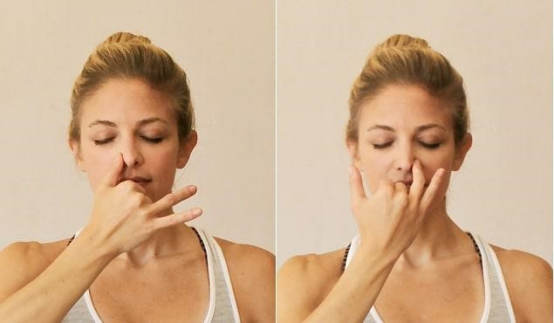
In the practice of mental state regulation, breathing training has been widely used in stress reduction, meditation, and cognitive behavioral therapy. By controlling the rhythm and depth of inhalation and exhalation and the opening and closing of the nasal passages, individuals can consciously activate the parasympathetic nervous system and reduce tension. Combining this with nasal strips, especially at night or during sleep, can optimize airflow and enhance the effects of breathing training.
For example, deep nasal inhalation combined with the physical support of nasal strips moderately expands the nasal cavity, increasing airflow and thus enhancing lung ventilation efficiency. This improvement not only enhances the breathing experience but can also indirectly improve mood by stabilizing the oxygen-to-carbon dioxide ratio. For individuals experiencing mild daily stress, this simple combination of interventions can produce significant mood stabilization without the need for medication or complex equipment.
Higher-order value perspective: From breathing to psychological resilience
Understanding the intrinsic connection between breathing and mood helps to gain a more comprehensive understanding of the higher value of nasal strips. They are not only a tool for improving nasal ventilation but also an auxiliary means of providing the possibility of mood fine-tuning. Smooth nasal breathing can provide an individual with a perceived emotional buffer under daily stress or mild anxiety, thereby enhancing psychological resilience and daily adaptability.
In everyday life, whether it’s preparing for work stress in the morning or entering deep sleep at night, stable breathing and airflow can have a positive effect on mood swings. With non-drug aids like nasal strips, users can easily optimize their breathing patterns and indirectly maintain emotional stability. For those wishing to explore more advanced methods of breathing and emotion interaction, refer to the [nasal strips psychological support guide] to understand how breathing optimization can enhance psychological resilience and stress management.
Conclusions and Action Recommendations
There is a clear physiological and neural link between smooth breathing and emotional stability. Minor nasal congestion can trigger mild sympathetic nerve activation, increasing anxiety or irritability, while improved nasal ventilation can stabilize mood through multiple neural feedback pathways. Nasal strips provide immediate, non-pharmacological physical support in this process, allowing for smoother airflow and potentially helping to regulate the nervous system and psychological state.
To maximize this benefit, users should pay attention to:
- The fine-tuning effect of nasal ventilation on the autonomic nervous system;
- The link between unobstructed nasal breathing and mood fluctuations;
- Synergistic effect of nasal aids and breathing training.
By understanding the higher-order connection between breathing and emotions and integrating nasal strips into daily regulation techniques, psychological resilience can be improved and anxiety and irritability reduced without drug intervention, thereby achieving a more stable emotional state and a more efficient daily experience.