
Table of Contents
The quality of one’s breathing at night often determines the depth of sleep and one’s mental state in the morning. Different sleeping positions—sleeping on one’s back, side, or even slightly prone—significantly affect nasal airflow, and these differences can directly relate to snoring frequency, the proportion of light sleep, and oxygen supply throughout the night. Nasal strips play a subtle yet crucial role in this scenario: by physically expanding the nasal cavity, they improve airflow, making breathing smoother, thus synergizing with specific sleeping positions to optimize the nighttime breathing experience and overall sleep quality.
The effect of sleeping on nasal ventilation
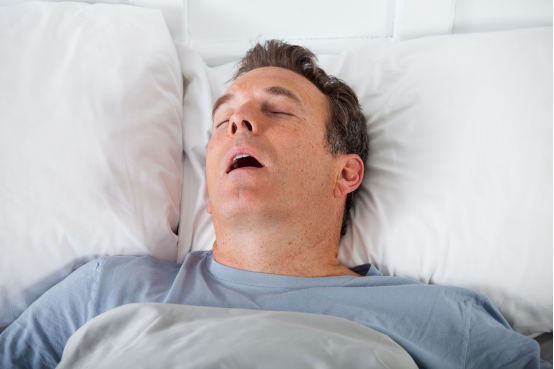
Sleeping on your back is one of the most common sleeping positions, but it is also the position that presents the greatest challenge for nasal ventilation. When lying on your back, the base of the tongue and soft palate tend to collapse slightly towards the back of the throat due to gravity, which may narrow the upper airway and increase airflow resistance. At the same time, the microcirculation and mucous membrane congestion in the nasal cavity are more prone to fluid accumulation or slight swelling in this position, thereby reducing airflow efficiency.
snoring but In this context, the role of nasal strips in sleep positioning becomes particularly important. By externally supporting the nasal ala, nasal strips can physically widen the nasal openings, allowing air to enter the nasal cavity more smoothly and reducing local resistance even when sleeping on your back. This improvement is not just about reducing snoring but also about stabilizing the nighttime breathing rhythm through a micro-balance of oxygen supply and carbon dioxide emission, leading to deeper and more continuous sleep.
Advantages and limitations of side sleeping in terms of airflow
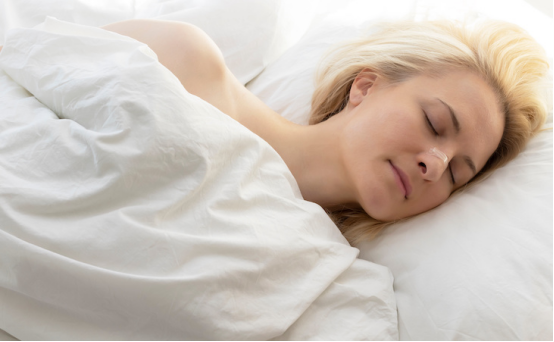
Sleeping on your side is widely considered a more conducive sleeping position for breathing, especially beneficial for people who snore or have mild obstructive sleep apnea. Through gravity, the base of the tongue and soft palate move away from the midline of the throat, naturally keeping the airway open and increasing airflow. At the same time, side sleeping reduces fluid buildup in the nasal cavity, alleviating mucosal congestion and further optimizing airflow.
However, side sleeping isn’t perfect for everyone. Even a slight head tilt or an improperly sized pillow can cause pressure on one side of the nasal cavity or restrict airflow in that area. In such cases, optimizing side-sleeping breathing requires additional assistance. Nasal strips can still be helpful while side-sleeping, maintaining balanced airflow by stabilizing the shape of the nostrils. Even with the slight pressure from side sleeping, they can keep airflow smooth, improving nighttime oxygen supply and sleep continuity.
Synergistic mechanism between nasal strips and sleeping position
The relationship between airflow and sleeping posture is not one-way. A good sleeping posture can reduce upper airway resistance, while nasal strips provide physical channel optimization. The combination of the two can achieve a more stable breathing rhythm and oxygen distribution at night.
Research and user feedback indicate that when the nasal passages are clear, the autonomic nervous system is more likely to maintain balance, resulting in fewer light awakenings at night and a higher proportion of deep sleep. This effect is particularly noticeable in supine sleepers, whose airways are more susceptible to compression; while for side sleepers, the auxiliary effect of nasal strips lies in preventing uneven local ventilation caused by unilateral nasal compression.
From an airflow perspective, the synergistic effects of airflow posture extend beyond oxygen supply; it also influences carbon dioxide perception and respiratory rhythm. Smooth nasal airflow leads to more stable breathing, reduces micro-awakenings, and thus improves overall sleep efficiency.
Advanced perspective: Improving the nighttime breathing experience without medication
By observing the interaction mechanism between nighttime breathing and sleep posture, we can find that nasal strips provide more than just improved surface ventilation; they offer a low-intervention, non-pharmacological strategy for optimizing nighttime breathing. Combined with sleep posture, they can enhance oxygen supply and respiratory stability without altering natural sleep patterns, thereby indirectly improving sleep depth and post-wake mental state.
aid but For example, when using nasal strips at night, back sleepers can achieve smoother nasal ventilation and reduce the frequency of breathing interruptions; side sleepers can maintain balanced airflow and reduce unilateral obstruction caused by pillow pressure or subtle changes in posture. The superior value of this method lies in the fact that it is not only a physical aid but also forms a closed loop of optimization with breathing rhythm, neural feedback, and sleep quality.
Conclusions and practical recommendations
, The impact of sleep posture on nasal ventilation cannot be ignored. While sleeping on one’s back is common, it can easily increase airway resistance; while sleeping on one’s side improves natural airflow, there is still a risk of localized pressure. With the assistance of nasal strips, individuals can maintain stable nasal airflow in different sleeping positions, thereby optimizing nighttime breathing rhythms and sleep quality.
Key points of practice include:
- When sleeping on your back, use nasal strips to support your nose and reduce upper airway resistance.
- When sleeping on your side, keep your nostrils in a balanced shape to prevent pressure on one side.
- By combining sleeping positions with nasal aids, a stable nighttime breathing strategy can be formed.
This method is a non-pharmacological, low-intervention breathing optimization approach, suitable for those seeking deep sleep and high-quality rest. By understanding the interaction between nasal strips, sleep position, and airflow posture, everyone can achieve a smoother breathing experience at night, indirectly improving overall sleep quality and daytime energy levels.