
We spend nearly 90% of our lives indoors, but we often view our indoor environment as a static, harmless “bubble.” However, the reality is much more complex: closed windows, recirculated HVAC air, dust buildup, and volatile organic compounds (VOCs) combine to create an indoor microclimate that can pose a serious challenge to our respiratory system. This hidden burden on our airways is precisely why many are turning to simple, non-pharmacological solutions like nasal strips to enhance daily breathing efficiency, even when indoors.
For those sensitive to these subtle environmental changes—whether it’s a minor nasal structure issue or an underlying allergy—indoor air quality (IAQ) often determines their comfort, concentration, and even sleep quality. That persistent, low-intensity nasal congestion isn’t necessarily just a cold; it’s often a mild reaction to the environment.
This is precisely where nasal strips, this seemingly simple tool, find their place in our daily health management. Don’t think of them merely as patches to use during sleep or exercise. These small, flexible strips are actually key tools for enhancing indoor air quality support, allowing your nose to better filter and manage the air, whether you’re working, studying, or enjoying quiet time at home.
We will go beyond the traditional “snoring” narrative and explore how these nasal strips can serve as a lasting physical countermeasure to help the nose cope with structural contractions exacerbated by common indoor stressors.

Indoor Breathing Challenge: Why do you get a stuffy nose indoors?
You might ask, “Why do I feel more congested even though I’m not exposed to outdoor irritants?” The answer usually lies in both structural and environmental factors:
1. Structural tendency (nasal flap area)
Even with a slight septal deviation or insufficient cartilage strength, the nasal flap area (the narrowest part of the airway) is highly susceptible to influence. When you breathe normally, the slight negative pressure created during inhalation causes the soft nasal cartilage walls to collapse inwards. This often goes unnoticed unless inflammation occurs.
2. Environmental degradation
Indoor air quality is a persistent source of stress.
- Dust mites and dander: These are non-seasonal allergens that are present year-round and found in large quantities in carpets, bedding, and upholstered furniture.
- Low humidity: Dry winter air or excessive use of air conditioning can dry out the nasal mucosa, leading to irritation and inflammation. The body swells excessively in an attempt to protect itself, exacerbating nasal congestion.
- Chemical exposure: Volatile organic compounds (VOCs) emitted by cleaning products, new furniture, or particulate matter released by scented candles can irritate the inner lining of mucous membranes, causing defensive swelling and congestion.
When the nasal mucosa swells due to these irritants, the already narrow nasal flap area becomes a bottleneck. Nasal strips directly alleviate this structural bottleneck by physically lifting and supporting the external nasal tissue. This allows your nose to become a highly efficient filter and humidifier, which is crucial for effective respiratory comfort management.
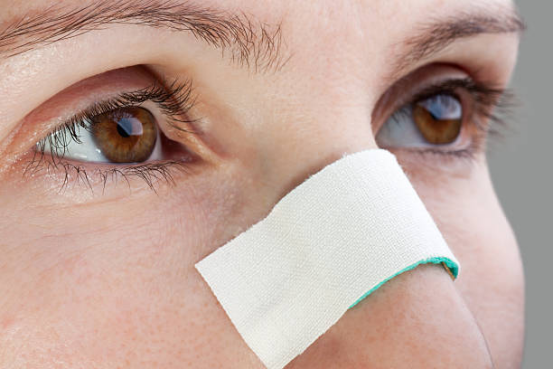
Airflow optimization: Enhancing the nose’s built-in HVAC system
Imagine your nose as your personal heating, ventilation, and air conditioning (HVAC) system. When you breathe through your mouth, you bypass all three functions. Only when you breathe through your nose do you fully activate the system.
Using nasal strips ensures your nose functions at its best, even in less-than-ideal indoor environments.
Filtration efficiency
Wider, more open nasal passages allow air to flow more slowly and deeper through the nasal turbinates and the inner mucus layer. This maximizes the contact time between air and the sticky mucus, trapping more inhaled particles, dust, and indoor allergens and preventing them from reaching your lungs. This increased surface contact time is a key component of effective nasal air filtration.
Humidity and temperature control
The nasal cavity is designed to humidify and warm air before it enters the lungs. When nasal congestion forces you to breathe through your mouth, dry, cold air hits your lungs and throat directly, causing irritation and a chronic dry cough or sore throat—common complaints in offices or overly air-conditioned environments.
By using open nasal strips, you can effortlessly maintain nasal breathing, allowing your body to maintain this crucial internal environmental control, thus greatly enhancing your respiratory comfort management.
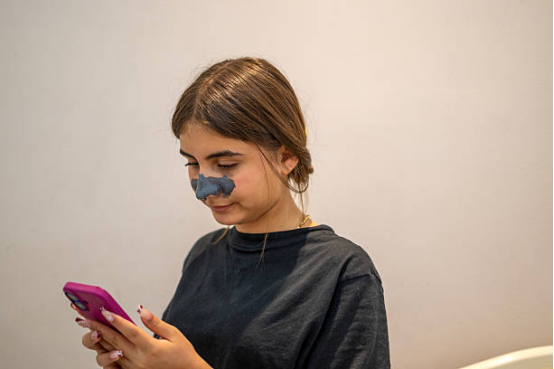
Cognitive Benefits: Nasal Strips Help Focus and Reduce Anxiety
The link between nasal breathing and mental performance is well-established physiologically. Mouth breathing is shallow and rapid, typically stimulating the sympathetic nervous system’s “fight or flight” (SNS) response. Nasal breathing, aided by open nasal strips, is slower and deeper and automatically activates the vagus nerve, initiating the parasympathetic nervous system’s “rest and digest” (PNS) mode.
Reduce low-level stress
In a stressful office or while studying late at night, chronic nasal congestion subtly forces you to switch to mouth breathing. This low-level physiological stress—constantly sending “fight or flight” signals—increases heart rate and cortisol levels.
Wearing nasal strips provides a reliable physical mechanism for easy nasal breathing. This helps stabilize your heart rate, reduce environmental anxiety, and significantly improve your focus and concentration when tackling demanding tasks indoors. It’s a simple, non-chemical method for instant respiratory comfort management and cognitive enhancement.
Practical Application: Integration of Nasal Strips in Indoor Scenarios
How can you seamlessly integrate these strips into your home without causing any disruption?
- Workday Focus: Before long hours of desk work, important video conferences, or reading complex documents, apply a pad to help maintain a calm, focused nasal breathing pattern.
- Indoor workouts: When doing yoga, home workouts, or low-intensity cardio, using nasal strips can maximize the oxygen supply from nasal breathing during exercise and reduce the need to switch to mouth breathing too quickly.
- Dust removal and cleaning: If you are sensitive to dust while vacuuming or cleaning, applying a strip beforehand can ensure that your nose’s filtering capacity is at its maximum, providing a physical barrier against acute irritation.
Nasal strips make them a key, lightweight accessory for optimizing your daily breathing, whether you’re at home or in the workplace.
For those interested in optimizing their entire indoor environment, from air purifiers to humidity levels, and integrating nasal strips into a coherent indoor air quality support plan, you can refer to our [Design the Ultimate Home Breathing Environment Guide].
Your nose is a masterpiece of bioengineering. Don’t let indoor air quality and structural bottlenecks limit its function. By harnessing the simple power of nasal strips, you can unleash peak breathing performance, not just for sleep or exercise, but for every focused moment in your indoor life.