
Table of Contents
If you’re a heavy user of nasal strips, whether it’s to relieve annoying snoring or to get more oxygen during marathon training, you’ve probably experienced this moment of utter frustration:
Waking up in the morning to find that the plastic strip that should have been on your nose is now awkwardly stuck to your cheek or pillow.
Or during a long bike ride, as sweat drips down, the edge of the nose strip starts to curl up, and your once smooth breathing passage suddenly “collapses.”
—began When traditional elastic rebound technology hit its limits, a new species with a cyberpunk aesthetic—Magnetic Nasal Strips—began to go viral on Instagram and in the fitness world. Brands like Intake Breathing claim to offer “unparalleled ventilation.”
revolution or But is this a genuine breathing revolution or just a beautifully packaged marketing scam? To answer this question, we need to dissect its core logic and conduct a brutal comparison with traditional nasal strips.
Mechanism Showdown: Physical Rebound vs. Magnetic Levitation
materials but To understand the difference between these two, we must first understand the fundamental difference between the magnetic nose strips’ mechanism and traditional products. This is not just a difference in materials but a complete subversion of the principles of mechanics.
Traditional nose strips: a battle relying on “internal strength”
Right, Breathe Right and the like are based on a highly elastic plastic strip embedded in tape. When you bend it and apply it to your nose, it tries desperately to straighten itself. This “resilience” pulls on the skin, thus opening up the nasal cavity.
The problem is that this force is limited. If the tension is too strong, the glue will break; if the tension is too weak, the nasal valve won’t open. It’s a delicate balance between the adhesive’s stickiness and the plastic’s elasticity.
Magnetic nose strips: cranes that rely on “external force”
nasal strips break Magnetic nasal strips break this process down into two parts:
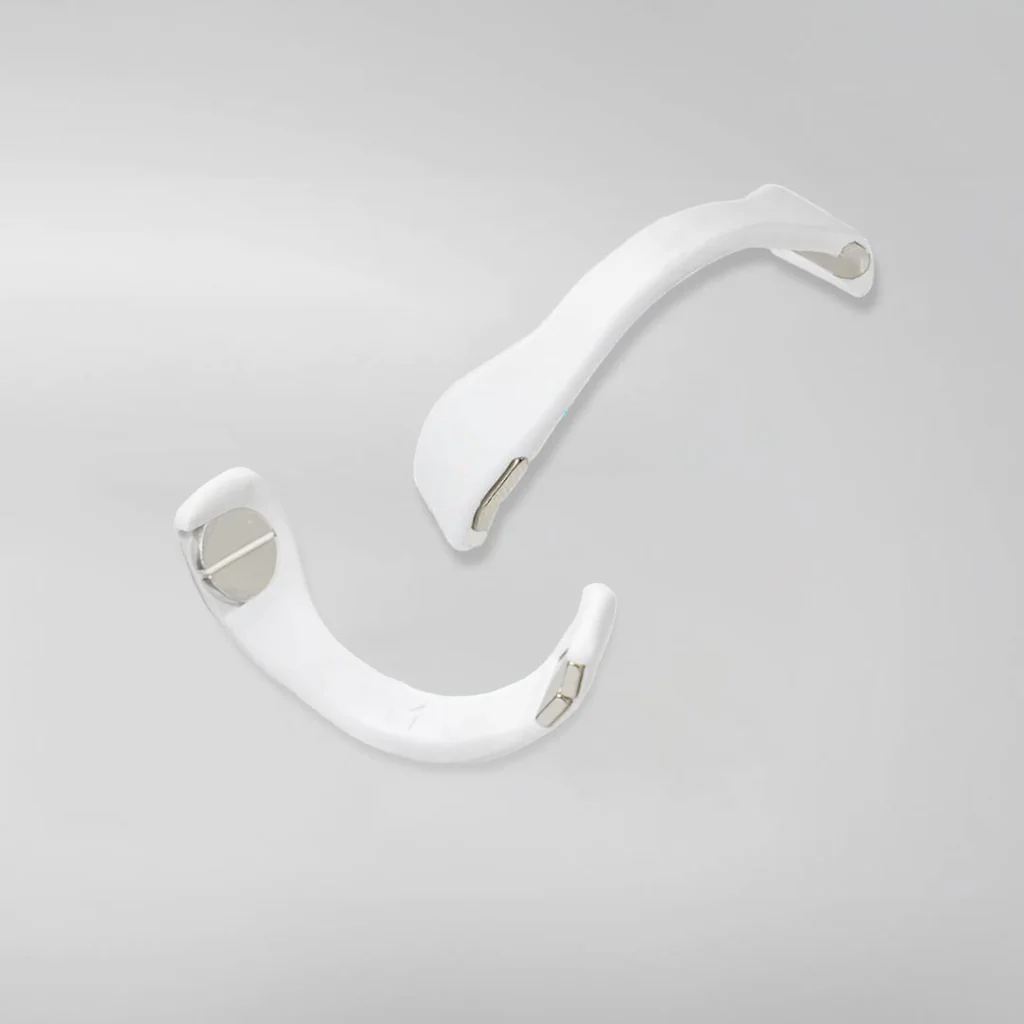
- Band-Aid). Implantation: You need to attach two small adhesive patches with metal discs to the sides of your nose (instead of crossing the bridge of your nose like a Band-Aid).
- Power end: You take out a rigid magnetic nose bridge, and it clicks and attaches to the metal plates on both sides.
itself but At this point, the nasal bridge uses powerful magnetic attraction to lift the nostrils vertically upwards. It’s like having a miniature crane mounted on your nose. It no longer relies on the contraction of the tape itself but on the rigid support of the external structure.
In-depth review: Intake Breathing vs. Breathe Right
Intake breathing and Breathe Right from three dimensions: expansion range, stability, and comfort.
1. Dilation Power
Traditional nasal strips: The effect is gentle. They are sufficient for mild nasal congestion or ordinary snoring, but they are often ineffective for severe nasal valve collapse or deviated septum.
Magnetic nose strips: Absolutely superior. The difference is visible to the naked eye. The moment you put on the magnetic nose bridge, you’ll feel your nostrils being “violently” stretched to their anatomical limits.
Many users have commented, “This is the first time in my life I’ve felt air being directly poured into my lungs.”
If you’re looking for maximum airflow (such as during high-intensity aerobic exercise), the magnetic version is the only option.
2. Stability and sweat resistance
Traditional nose strips: This is their Achilles’ heel. Once the skin becomes oily or sweaty, the bridging part across the bridge of the nose is the first to lose its stickiness.
Detachable and magnetic nose strips: The adhesive strips are detachable and only applied to the flattest areas on either side of the nose, avoiding the oiliest T-zone of the nose.
Furthermore, the magnetic bridge itself is suspended, unaffected by facial muscle movements. Therefore, it is widely recognized as the best nasal dilator for sports, remaining stable even during strenuous CrossFit training.
3. Comfort & Look
Traditional nose strips: less foreign body sensation, almost invisible (if they are transparent).
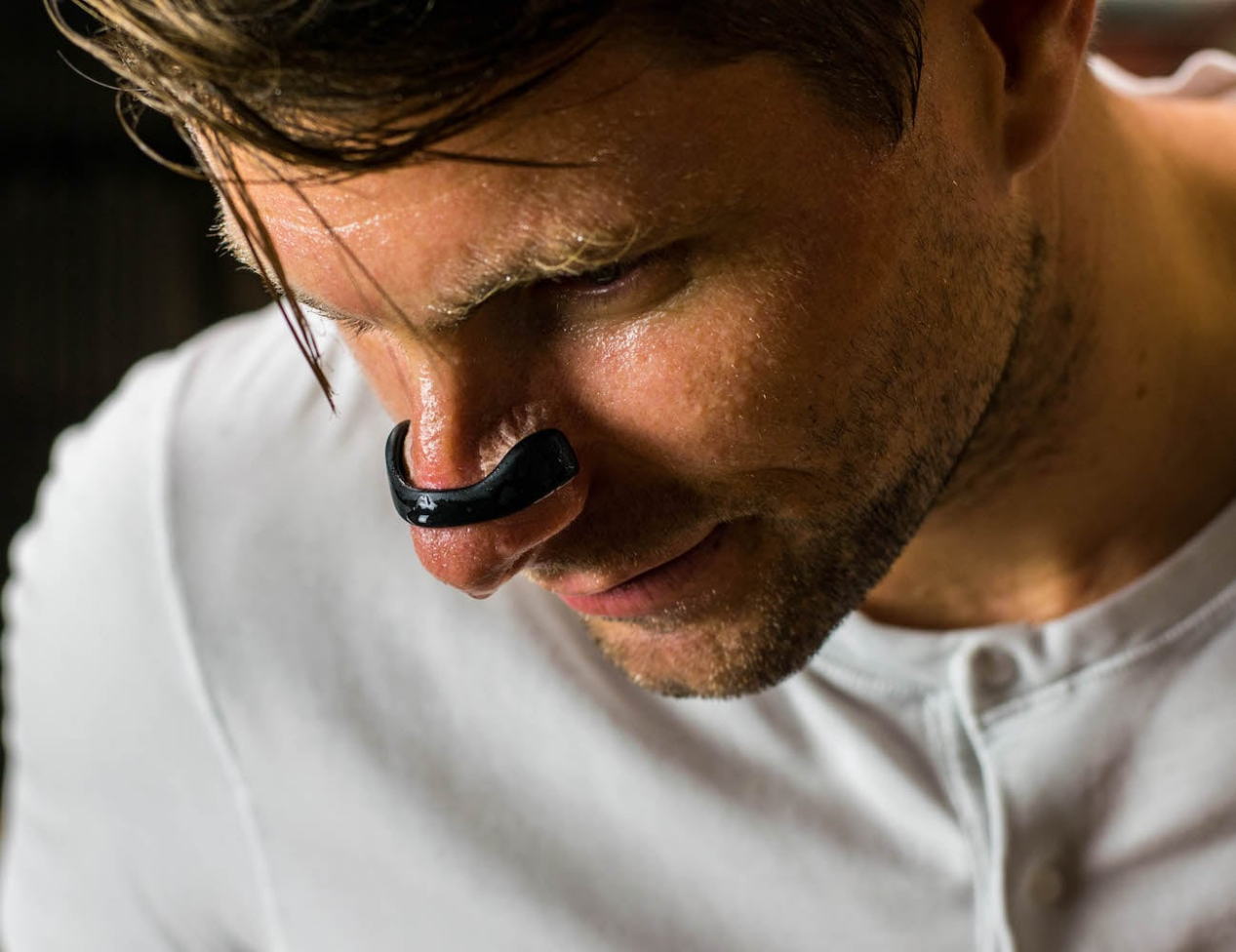
Magnetic nose strips: Their appearance is extremely aggressive, making wearers look like movie villains (like Bane) or cyborgs.
Furthermore, due to the excessive expansion force, first-time users may experience soreness in their nasal muscles. This is a hardcore solution that sacrifices aesthetics for performance.

Price and Hidden Costs: Is it worth the investment?
This brings us to the most sensitive issue: money.
Traditional nose strips are a typical example of “consumable economy,” with a box of 30 strips costing around tens of yuan, averaging a few yuan per day, and they are used and then discarded.
,,Magnetic Nasal Strips, on the other hand , follows a “device + consumables” model:
- starter kit starter kitHigh entry barrier: You need to purchase a Starter Kit that includes a magnetic nose bridge, which usually costs between $30 and $50 (about 200-300 RMB).
- Ongoing costs: While nose bridges are permanent, the metal tabs applied to the nose are still disposable. Calculations show that the cost per use is often 2-3 times that of traditional nasal strips.
Is this a tax on intelligence?
If we disregard effectiveness and focus solely on cost, it is indeed expensive. However, if you consider it as “sports equipment” rather than “daily consumables,” the pricing logic makes sense. Just as you would buy carbon-plated running shoes to run faster, magnetic nose strips are designed for those who have an extreme pursuit of breathing efficiency.
Are you an early adopter or someone who needs it urgently?
—this —thisThe magnetic nasal inhaler review in the title, this is not a black-and-white choice, but rather a segmentation based on user profiles.
nasal strips nasal stripsYou should stick to traditional Nasal Strips if:
- snore or You only use it occasionally when you snore or when you have a cold.
- You are price-sensitive and seek value for money.
- You don’t want to sleep with a hard plastic frame on your face.
You should upgrade to Magnetic Nasal Strips if:
- cycling). Endurance athletes: You need VO2 max to improve athletic performance (running, cycling).
- For patients with structural nasal congestion: Your nasal valves are severely collapsed, and ordinary nasal strips cannot be stretched open.
- Gear Enthusiast/Biohacker: You are passionate about trying out all sorts of cutting-edge technologies that can optimize your physical functions, and you don’t mind paying a premium for them.
In conclusion, magnetic nose strips are not a scam; they are a “heavy weapon” in the field of nasal breathing. For the average person, it might be overkill, but for those who need it, it represents an irreversible upgrade in experience.
FAQ
1. Do the magnets in magnetic nose strips have any effect on the body or brain?
Absolutely not. These products use static permanent magnets with extremely low magnetic field strength, which only act on a metal plate in the area of the nose.
It does not produce electromagnetic radiation and will not interfere with brain nerves or heart pacemakers (unless the pacemaker is placed extremely close to the nose, which is almost impossible).
2. Can the metal tabs be reused?
The official recommendation is single use. Although some people may try to reuse them to save money, facial oils can damage the adhesive layer, making them very easy to fall off during a second use due to the strong magnetic pull.
If you use them while sleeping, falling off could cause a return of the suffocating sensation in the middle of the night; if you use them during exercise, there is a risk of inhalation.
It is recommended to adhere to the single-use principle.
3. Will it be uncomfortable to sleep on my side while wearing a magnetic nose bridge?
This is a real pain point caused by its structure. Because the magnetic nose bridge is rigid and protrudes from the face, if you are used to sleeping on your side with your face buried in the pillow, the nose bridge will compress the bridge of your nose or be rubbed off by the pillow.
This type of product is more suitable for supine sleepers or those who are active.
If you are a heavy side sleeper, traditional soft nasal strips may still be a better companion.