
Nasal strips are often discussed within a broader context where many health problems are overlooked not because they are severe, but because they are mild, common, and easily adapted to. Issues that eventually lead people to consider nasal strips—such as persistent yet low-grade nasal discomfort—rarely cause sharp pain or immediate dysfunction. Instead, they linger quietly at the margins of breathing, sleep, and concentration, gradually fading into what is perceived as “normal.”
As this adaptation takes place, awareness of nasal airflow diminishes. Whether breathing through the nasal cavity feels smooth or slightly restricted becomes a background detail that few people consciously evaluate, even when nasal strips are available as a non-invasive aid. This perceptual dulling helps explain why nasal strips have long remained in a state of “passive demand”: not because their function is unclear, but because the everyday discomfort they address is rarely recognized as a problem in the first place.
Adaptability does not equal health
The human nervous system is extremely adept at adaptation. Whether it is persistent noise, minor discomfort, or long-standing bodily signals, as long as they do not pose an immediate threat, the brain will proactively lower their perceived priority. This mechanism is highly efficient from an evolutionary perspective, but in modern life, it can also mask issues that may warrant attention—especially those related to breathing, where aids such as nasal strips are often considered only after prolonged adaptation.
Mild nasal resistance is a typical example. Slight nasal narrowing, uneven airflow during sleep, or intermittent shortness of breath rarely triggers an explicit “abnormal” label. Over time, this breathing adaptation leads people to accept a suboptimal respiratory state as their baseline, even when simple, noninvasive options like nasal strips exist to highlight the difference.
In feedback from many real users, it was only after briefly experiencing smoother breathing—sometimes during initial exposure to nasal strips—that they realized their previous state had been quietly limiting. This contrast illustrates an important point: adaptability is not the same as health. Rather, it reflects the brain’s tendency to reduce friction by normalizing whatever state it encounters most consistently.
The psychological pathway of ignoring nasal discomfort
ignoring nasal discomfort ignoring nasal discomfortFrom a psychological perspective, nasal discomfort ignoring often involves a clear yet subtle process. Initially, changes in breathing may be occasional and require conscious attention to be noticed; subsequently, it becomes a background state, mixed with fatigue, stress, or environmental factors, making it difficult to identify in isolation; eventually, the brain completely abandons monitoring this signal.
oversight but oversight butThis process is not an individual oversight, but a widespread cognitive energy-saving strategy. Unlike obvious pain, nasal discomfort does not trigger strong behavioral feedback and is therefore rarely included in the “problem list.” In fast-paced life, people tend to deal with overt problems and ignore the details that are “tolerable.”
point but point butThis is why many breathing-related assistive devices are not actively sought out, but rather their significance is only rediscovered after being reminded of them. In this context, nasal strips do not address a fully recognized pain point, but rather awaken a long-neglected blind spot in perception.

Why is the perception of breath so easily underestimated?
Unlike heart rate, pain, or mood, breathing is largely automatic. People rarely assess their nasal airflow with any level of awareness unless there is a clear blockage or acute shortness of breath. For this reason, aids such as nasal strips are often encountered only after long periods of unconscious adaptation. Yet research findings and industry observations consistently indicate that even subtle changes in nasal airflow can meaningfully influence sleep depth, daytime focus, and overall fatigue.
The challenge is that these effects are cumulative rather than immediate. They tend to surface as vague impressions—such as “I’m always a little tired” or “I don’t feel fully recovered after sleeping”—and are rarely attributed directly to breathing mechanics. As a result, breathing remains an invisible variable, present but largely unquestioned, even when simple interventions like nasal strips exist in the background.
When some users first experience a clear improvement in nasal ventilation during rest or at night—sometimes coinciding with the initial use of nasal strips—their reaction is often not surprise but confusion. The contrast can feel unexpectedly obvious. This moment of confusion itself highlights how consistently breathing quality has been underestimated and underexamined over time.
How passive demand is formed
The so-called “passive demand” doesn’t mean the demand doesn’t exist, but rather that it hasn’t been clearly named. For nasal discomfort, the demand is often hidden beneath broader sensations, such as insufficient sleep, feeling unwell upon waking, or frequent tossing and turning at night. The demand is only activated when a specific experience connects these sensations to breathing.
Nasal strips play a crucial role in this cognitive shift. They don’t require complex explanations or involve invasive changes; instead, they allow users to rediscover the presence of airflow in their nasal cavity in the most intuitive way. Once this awareness is awakened, previously ignored discomfort begins to be redefined.
model but model butThis approach differs from many health aids; it doesn’t start with a “problem-solution” model, but rather builds awareness gradually through “perception-comparison-understanding.” Because of this, many users don’t believe they “need” anything before using it.
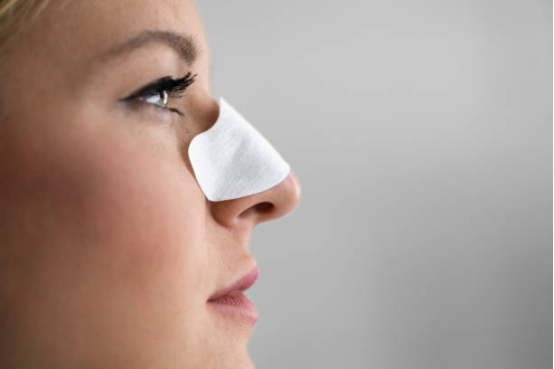
The turning point from neglect to awareness
It’s worth noting that this cognitive shift often occurs in very ordinary scenarios: lying quietly at night, resting after a long period of focused work, or the instant upon waking in the morning. When external distractions are reduced and bodily sensations are amplified, the differences in nasal ventilation become clear.
, Industry content and user experience suggest that once people develop a basic understanding of nasal airflow, it becomes easier to distinguish between environmental factors and issues stemming from their own breathing structure or habits. This awareness itself constitutes a starting point for improvement, without relying on any radical measures.
What is overlooked is often closest to the truth.
Mild nasal discomfort is often overlooked not because it’s unimportant, but because humans are too adept at adaptation. Adaptation makes life smoother, but it also causes some details that should be optimized to quietly disappear. When breathing becomes background noise, the body’s true state becomes harder to hear.
Nasal strips lie not in creating problems, but in revealing that the problems were always there. They address not explicit pain points, but rather long-neglected perceptual gaps. Change becomes possible only when people rediscover the existence of breathing.
Perhaps the real question to consider is not “whether we need to improve our breathing,” but rather how many discomforts we’ve become accustomed to having ignored simply because they’ve never loudly reminded us.