
Table of Contents
In the dead of night, office lights remain bright, or the blue glow of screens still illuminates the corners of the room. For many workers and students who chronically stay up late, completely adjusting their sleep schedule seems like an unattainable goal. Given the inability to fundamentally change sleep patterns, maintaining sleep quality and ensuring smooth breathing at night become pressing practical issues. In this context, nasal strips offer a physical aid that can play a role in “damage control” rather than replacing a healthy sleep schedule.
Potential risks of staying up late and nighttime breathing restriction
Long-term sleep deprivation not only disrupts circadian rhythms but can also increase the burden on the respiratory tract. Studies show that the lack of deep sleep at night can easily lead to decreased upper airway tension, uneven breathing rate, and may worsen mild nighttime obstruction. For nasal strip night owls, this means that even short periods of rest may result in frequent awakenings or difficulty breathing during light sleep.
In addition, the mental stress, ambient light, and body temperature fluctuations associated with staying up late can all exacerbate breathing difficulties and further affect sleep recovery efficiency. Therefore, improving late-night sleep breathing has become a real need, but such improvements should not be misunderstood as resetting one’s sleep schedule or providing health compensation, but rather as a strategy of “local optimization.”
The physical function and stop-loss value of nasal strips
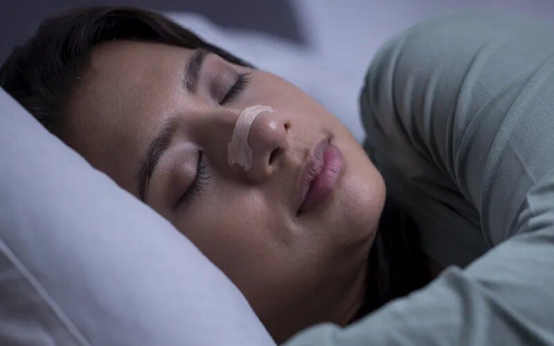
Nasal strips gently open the nasal cavity externally, widening the nasal passages and thus physically improving airflow resistance. Unlike medications or sprays, this method does not rely on chemical ingredients and therefore does not increase the burden on sensitive respiratory tracts or skin. For people who frequently stay up late, its value lies primarily in sleep damage control; that is, when it is impossible to restore an ideal sleep schedule, it minimizes the impact of nighttime breathing obstruction and reduces fatigue the next day caused by light sleep and restricted breathing.
Real-world user feedback shows that even short periods of deep rest can help improve nighttime ventilation efficiency, thereby maintaining respiratory stability to some extent and reducing micro-arousals caused by respiratory resistance. While this effect cannot completely compensate for the physiological damage caused by staying up late, it provides an actionable “damage mitigation” method, allowing the body to receive a smoother oxygen supply during limited rest periods.
Sensory experience of a sensitive night owl
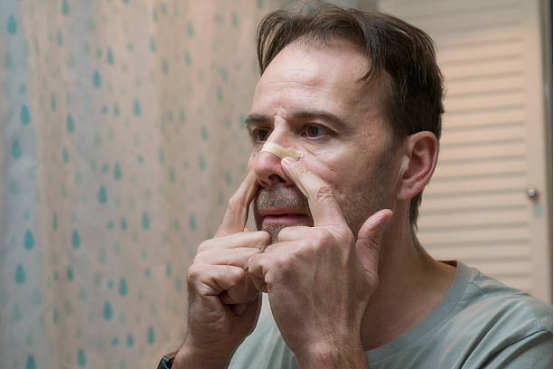
Among those who frequently stay up late, many are sensitive to adhesive strips or even slight pressure. When using nasal strips, night owls, the feel and fit are key to a comfortable experience. Soft, hypoallergenic materials reduce skin irritation, while a moderately wide design ensures good airflow without making it difficult to fall asleep.
It’s worth noting that highly sensitive night owls may experience a slight foreign body sensation when using the nose strip for the first time, but they usually adapt gradually a few minutes after falling asleep. Users can reduce their sensitivity to sensory stimuli by trying it out for a short time, adjusting the fit, and choosing a version with a softer material, thus achieving more efficient breathing support during limited rest time.
Usage strategies and practical suggestions
For those who cannot completely change their sleep patterns, a rational usage strategy is especially important. First, nasal strips should be regarded as an auxiliary tool rather than a remedy. This means that the goal should be clear before use: to improve nighttime breathing and reduce micro-awakes, rather than to use nasal strips to offset the overall health damage caused by staying up late.
Secondly, it is recommended to start with a short trial period, such as observing during nighttime naps or afternoon naps, to assess the impact of the nasal strip on breathing ease and difficulty falling asleep. After gradually adapting, it can be used during the main rest period at night, combined with optimized environmental factors (such as bedroom temperature and humidity and light control) to maximize the improvement in nighttime breathing. In addition, recording the user experience and changes in sleep quality will help to evaluate the actual effectiveness of sleep damage control in the long term.
This strategy emphasizes rationality and gradual progress, avoiding over-reliance on any single tool, while helping people who frequently stay up late to achieve a controllable breathing assistance effect in a situation where they cannot change their sleep schedule.
Comprehensive analysis and rational positioning
Overall, nasal strips are of practical significance for people who frequently stay up late, as their advantage lies in a non-pharmacological, physical, and controllable way of improving breathing. Rather than expecting to “make up” for lost sleep through a single measure, a more reasonable approach is to “assist smooth breathing and mitigate the impact of light sleep at night.” This positioning is not only scientific but also helps users develop a rational mindset, avoiding disappointment due to overly high expectations.
In practice, users can optimize their experience by short-term trials, material selection, and fit adjustments, while also combining environmental optimization and pre-sleep relaxation strategies to improve nighttime breathing comfort.
Conclusion
While chronic sleep deprivation is undesirable, it’s difficult to completely avoid in reality. Nasal strips for night owls offer a rational physical aid, providing relief from nighttime breathing difficulties and helping to reduce the frequency of light sleep and micro-awakenings within a “damage control” framework. However, their effects are still supplementary and cannot replace a healthy sleep schedule or comprehensive sleep recovery measures.
By scientifically understanding product characteristics, rationally assessing individual sensory adaptability, and combining this with daily sleep management strategies, night owls can maximize breathing ease and sleep quality within limited rest time, truly achieving a balance between localized optimization and sleep damage control. This is not just a technological choice but a rational self-management approach in real life.