
One of the most common misconceptions in discussions about respiratory aids is understanding bodily feedback as an immediate, definite, or even dramatic transformation. However, in real-world use, change often doesn’t appear as a “significant improvement,” but rather develops slowly over time through a series of subtle yet continuous sensory adjustments. The one-week feedback from
Nasal strips are a prime example of this gradual change; it’s more like recalibrating the body’s systems than “imposing an effect” on the body.
the first week results of nasal strips according to a timeline, based on a large amount of publicly available user experience, industry discussions, and common usage paths. It will focus on the changes in breathing sensation, skin adaptation, sleep continuity, and psychological cognition to help readers build a judgment framework that is closer to the real situation, rather than being misled by single-point experiences or oversimplified descriptions.
The immediate phase after initial use: Perceived changes often precede the formation of judgments.
When using nasal strips for the first time, most people do not immediately describe the sensation as “improved breathing ability.” Instead, a more common description is that the breathing path feels smoother and more stable, without being accompanied by a noticeable sense of strength or stimulation.
This response aligns with how nasal strips function. Their mechanism is not to forcibly expand the nasal cavity but to apply gentle external tension that helps reduce the collapse of soft tissues during inhalation. At a physical level, this results in a slight reduction in airflow resistance rather than an overt, dramatic change.
During this early stage, physical changes tend to be limited, while perceptual changes are relatively active. Users often become more aware of their breathing rhythm, consciously checking whether anything has actually shifted after applying nasal strips. This process of “bringing attention forward” can amplify subtle sensory details that would normally go unnoticed.
Commonly reported immediate experiences include no longer unconsciously straining during inhalation, a smoother breathing rhythm, and a reduced sense of nasal presence. At the same time, a considerable number of users report no obvious difference during the first use. Within industry discussions, this feedback is not considered unusual and is more closely related to usage context, individual breathing patterns, and the person’s current physical condition than to the effectiveness of nasal strips themselves.
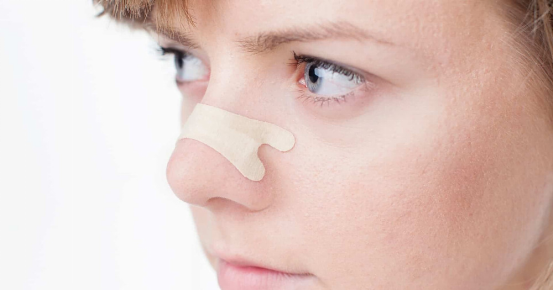
Days 1–2: Breathing adaptation and skin adaptation proceed simultaneously.
On the second day, the feedback began to show a more stable trend, and the key phrase shifted from “whether it is effective” to “breathing adaptation.”
At this point, the structural state of the nasal cavity had not changed drastically, but the brain’s perception of the breathing pathway was being re-established, and breathing gradually transformed from a “monitored action” into a more automated process.
Meanwhile, the skin’s adaptation to the strips also becomes apparent during this stage.
The tightness or slight pulling sensation that may occur during initial use usually diminishes significantly within 24–48 hours, as the skin in the adhesion area begins to adapt to this continuous but gentle tension.
Many users mentioned a similar detail at this stage: the act of applying strips became more natural, requiring no additional mental preparation.
From a behavioral perspective, this “reduced decision-making cost” often indicates that a habit is forming, rather than a single attempt.
Days 3–4: Changes in sleep continuity begin to be noticed.
What truly made some users aware of the changes was not their daytime breathing sensations, but their nighttime sleep experience after continued use of nasal strips.
Between the third and fourth day, feedback related to sleep increased noticeably, with discussion shifting toward sleep continuity rather than sleep duration itself.
Common descriptions include fewer nighttime awakenings, a shorter time needed to fall back asleep after turning over, and less rapid or labored breathing upon waking in the morning—experiences often attributed to the more stable airflow provided by nasal strips during rest.
While these changes may not appear significant on a numerical level, subjectively they can meaningfully reshape an individual’s overall perception of sleep quality.
Sleep research generally emphasizes that continuity of sleep often has a stronger influence on perceived recovery than total sleep length alone. In this context, even a slight reduction in breathing resistance—such as that associated with nasal strips—may help reduce brief, easily overlooked micro-awakenings throughout the night.
At this stage, the nasal strip experience is frequently described as one of “reduced presence but lasting effect.” The strips are no longer the focus of conscious attention, yet they begin to integrate quietly into the broader structure of sleep itself.
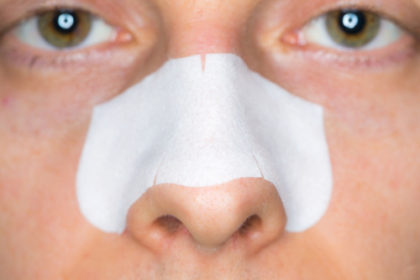
Days 5–6: Mental expectations begin to recalibrate.
Around the fifth day, a seemingly contradictory feedback began to emerge: some users briefly wondered if the effect had diminished.
This feeling did not stem from the actual change disappearing but rather from the natural weakening of the contrast.
As a certain state gradually becomes routine, the brain quickly reduces its weight on its novelty, thus decreasing explicit perception.
Therefore, “feeling less obvious” does not necessarily mean a decline in effectiveness; rather, it may mean that the body has adapted to the new breathing pattern.
During this phase, some users will pause use to compare their experiences, and the results often highlight differences more clearly, such as the recurrence of nighttime breathing discomfort or an increased frequency of sleep interruptions.
This reverse verification further reinforces the understanding of gradual improvement.
Day 7: The Cognitive Shift from External Tools to Body Synergy
The one-week mark is a point in time for many users to redefine the role of nasal strips.
At this stage, they are no longer simply seen as a “tool to improve breathing,” but rather as a conditional factor that participates in the coordinated functioning of the body.
Overall feedback typically focuses on three levels: less awareness of breathing, more stable sleep, and increased trust in the body’s self-regulation.
This trust does not stem from strong, immediate effects, but rather from the accumulation of positive experiences over several days with minimal disruption.
From an industry perspective, these low-intensity, low-invasive improvement methods are often more readily accepted in the long term and less likely to be abandoned.
This is why discussions surrounding the first week’s results of nasal strips are often seen as a relatively reliable observation window, avoiding the interference of novelty and not yet being completely obscured by habituation.
If you wish to further understand the differences in usage among different groups, you can explore some information about the nasal strips system, which often provides a more comprehensive perspective.
Not all effective changes need to be strongly perceived.
Discussions about nasal strips often come back to an overlooked question:
Must truly valuable physical improvements appear in a strong, immediate, and easily describable way?
When breathing becomes effortless, when nighttime awakenings no longer frequently interrupt sleep, and when the body is more stable upon waking in the morning, these quiet and unassuming changes constitute the most authentic feedback after a week.
Perhaps what’s more worth considering is whether a change that barely disrupts daily life, yet continuously adjusts the details of bodily functions over time, is precisely what makes it most worthy of serious attention?