
Most people are confident in their daytime breathing, yet find themselves tossing and turning at night, waking up with a dry mouth, or even a heavy head. The root of the problem is often not a disease but a severely underestimated physiological phenomenon: nocturnal nasal collapse is more common than you might think. It involves a complex interplay of anatomical structures, gravity, muscle tone changes, and airflow dynamics. Understanding this phenomenon can help people rediscover the physical value of nasal strips in nighttime breathing and make it clear that “intervention isn’t only needed when symptoms are severe.”
How nighttime body position changes the nasal airway
When the body changes from upright to lying down, the mechanical environment of the nasal cavity changes significantly. During the day, the direction of gravity helps maintain the tension of the soft tissues in the nasal cavity, especially the alar and nasal valve area. However, when lying flat at night, gravity makes these soft tissues more prone to collapsing inward or backward. This phenomenon, known in medical research as nasal valve collapse at night, is common even in people without rhinitis or chronic nasal congestion. Some individuals have found that using nasal strips can help them become more aware of subtle airflow changes during sleep.
The cross-sectional area of the nasal cavity is typically slightly smaller at night than during the day. This change, though small, is enough to have a measurable effect on nasal airflow during sleep. While simple aids such as nasal strips cannot completely prevent this structural limitation, they can provide gentle support to the nasal valve and make nighttime breathing feel noticeably easier. More importantly, the increased breathing resistance at night is usually not accompanied by noticeable pain or discomfort, so many people are unaware that they have this structural limitation until they try tools like nasal strips.
Decreased muscle tone exacerbates nocturnal collapse
During sleep, the muscles that maintain the opening of the upper airway naturally relax. This process is necessary for energy conservation and deep sleep, but it also makes the nasal valve area more susceptible to negative pressure during inhalation, causing it to collapse inward. Airflow passing through this narrow area creates stronger turbulence and suction, further increasing the risk of collapse.
This explains why, even if breathing is smooth during the day, intermittent increases in breathing resistance may still occur at night. Multiple studies have shown that even small structural collapses can lead to increased nighttime micro-awakenings, thus affecting sleep continuity and recovery quality.
During this stage, the mechanism of action of nasal strips becomes particularly important. They stabilize the nasal alae and nasal valve area through external tension, reducing soft tissue collapse during inhalation and thus maintaining a more stable airflow at night. This physical support is not aimed at inflammation but at the inherent characteristics of the airway structure at night.
Differences in breathing during the day and night
Many people believe that “easy breathing means there’s nothing wrong with the nose,” but the physiological conditions at night are completely different from those during the day. During the day, an upright posture combined with muscle tension allows the nasal cavity to maintain sufficient airflow, even if it is slightly narrow; at night, lying flat and muscle relaxation amplify the original slight limitations.
This explains why users often mention in discussions about nasal strips that they “don’t feel anything during the day but have difficulty breathing and disrupted sleep at night.” From a structural perspective, this is not a contradiction but rather a typical postural airway change.
Studies indicate that even without chronic rhinitis or chronic obstruction, approximately 30%–40% of adults experience mild to moderate nasal valve collapse at night, particularly when lying on their back or with their head below their heart. These data further suggest that nocturnal nasal collapse is a common phenomenon, rather than an isolated abnormality.
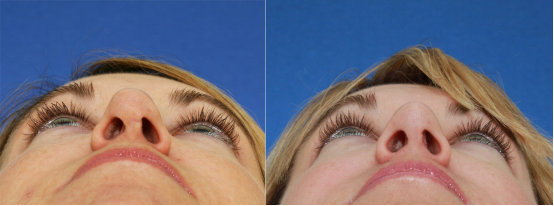
Importance and Anatomical Mechanism of the Nasal Valve Area
Of all the nasal structures that affect airflow efficiency, the nasal valve area is the most critical and also the most vulnerable. It is composed of the superior alar cartilage, connective tissue, and alar skin, and naturally possesses a certain degree of elasticity, which helps it to adapt to external forces and respiratory load during the day, but at night it can become a factor that restricts airflow.
When negative pressure is generated during inhalation, the soft tissue in the nasal valve area is prone to collapse inward if it lacks external support, leading to airway narrowing. Research on nasal strip anatomy shows that their function is to fix the position of the nasal alae and nasal valve area through gentle but continuous external tension, thereby reducing the probability of collapse and maintaining stable airflow.
Furthermore, individuals with a slightly deviated nasal septum or poor cartilage elasticity are more prone to airway narrowing at night, even if they are asymptomatic during the day. Therefore, understanding the combination of anatomical structure and airflow dynamics is key to correctly assessing nighttime respiratory stability and the value of nasal strips.
Subtle changes in psychology and perception
The effects of nocturnal nasal collapse are often underestimated because the slight increase in airflow resistance does not always cause noticeable awakenings. Users often only experience slight turning over, light sleep, or dry mouth upon waking in the morning, signals that are subconsciously ignored.
From a behavioral perspective, the nasal strips experience is often described as “low-impact but stable,” meaning that users hardly feel the physical intervention, yet it significantly reduces nighttime micro-awakes and sleep disturbances. This low-intensity, gradual improvement often leads people to mistakenly believe that “if there’s no problem, it’s unnecessary,” but in reality, it is a true reflection of nighttime structural collapse.
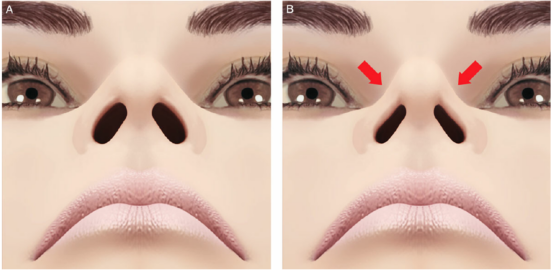
Analysis of airflow dynamics and negative pressure effect
From a physics perspective, the negative pressure during inhalation makes soft tissues more prone to collapse. Even a small change in cross-sectional area can proportionally increase breathing resistance. According to Poiseuille’s law, a 10% reduction in airway radius can increase airflow resistance by nearly 20%, significantly impacting nighttime breathing continuity.
nasal airflow Sleep shows that repeated brief airway narrowing at night can cumulatively affect sleep structure, reducing deep sleep and increasing mild awakenings. Although this change may not be noticeable every morning, it can significantly reduce the quality of recovery in the long term.
Therefore, even without severe nasal congestion or sleep apnea, structural constraints at night still warrant attention. Physical aids such as nasal strips can reduce the impact of microcollapses on airflow without disrupting the natural breathing rhythm.
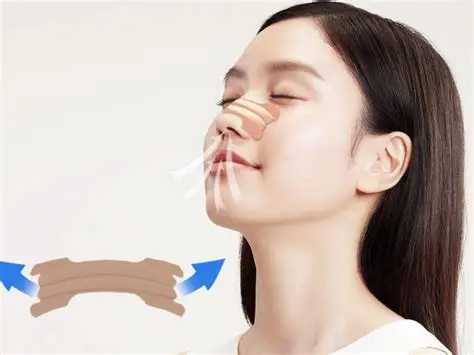
It’s not only when symptoms are severe that you need to pay attention.
Most people only realize they have breathing problems when symptoms become obvious, but nighttime nasal collapse serves as a reminder that even mild structural issues can cumulatively affect sleep quality.
Studies show that a slight increase in nighttime breathing resistance can lead to a rise in micro-arousals, impacting sleep recovery and daytime energy. This problem often lacks immediate pathological symptoms but persists for a long time.
By understanding this, people can adjust their mindset: using nasal strips doesn’t mean you have a serious illness, but rather it’s a low-intervention way to maintain nighttime airway stability. It helps reduce airflow resistance caused by structural collapse, thereby improving sleep continuity.
Understanding the true state of breathing at night
Nocturnal nasal strips are common but easily overlooked. They are not abnormal but rather a natural response of the body when lying down and asleep.
When we shift our focus from “severity of symptoms” to “structural stability,” we can better understand nasal strips. Their value in nighttime breathing: They are not drugs but a form of physical support that helps keep the airways open under negative pressure and gravity, reducing nighttime micro-awakes and improving the quality of sleep recovery.