
Table of Contents
As we age, all systems in the body undergo gradual changes, and the nasal cavity is no exception. With decreased soft tissue elasticity, weakened nasal alar support, and narrowing airways, many middle-aged and elderly people may notice subtle changes in their breathing sensations in daily life. These changes not only affect sleep at night but can also impact comfort during daytime activities. Against this backdrop, the value of nasal strips becomes increasingly apparent. By physically opening the nasal alar and bridge, they improve airflow, providing a safe, non-pharmacological breathing assistance solution for middle-aged and elderly individuals.
The effects of aging on nasal physiology
breathing The human nasal cavity is composed of cartilage, mucous membrane, and muscle tissue, and the elasticity of these tissues gradually decreases with age. Specifically, weakened support from the bridge and wings of the nose may result in less flexible nasal expansion during breathing compared to younger individuals. Even minor changes in mucous membrane thickness can increase airflow resistance, while decreased respiratory muscle activity further reduces airflow efficiency. Studies show that these factors work together to make middle-aged and older adults more prone to obstructive breathing during sleep at night or during light daytime activity; this condition is often categorized as “breathing changes with age.”
In this context, nasal strips aging provides additional support to the airway by physically widening the nostrils, allowing for smoother airflow and relieving mild congestion caused by soft tissue laxity. While this effect is not applicable to all structural problems, the improvement is noticeable for most people experiencing mild nasal aging.
Everyday breathing difficulties and potential improvement
Middle-aged and elderly people may experience various nasal discomforts in their daily lives, including snoring at night, difficulty breathing during light sleep or upon waking, mild nasal congestion, and shortness of breath during light exercise. While these issues may not necessarily affect basic daily life, their long-term accumulation can reduce overall quality of life and energy levels.
By appropriately using physical interventions for nasal airflow in older adults, middle-aged and elderly users can experience perceptible improvements in various scenarios. For example, a survey of people aged 60-75 showed that using nasal strips improved nighttime breathing ease by approximately 30%, while sleep quality scores also significantly improved. This indicates that physical interventions are not only effective during sleep but can also provide support during morning activities, light exercise, or focused work.

Usage strategies and precautions for nasal strips
To fully utilize nasal strips, middle-aged and elderly individuals need to pay attention to several key usage strategies. First, the placement is crucial; the strip should fit snugly against the upper part of the nose and the outer side of the nostrils to ensure the airway is fully opened, rather than merely covering the surface of the nostrils. Second, skin and mucous membrane conditions affect comfort; dry or sensitive skin can be alleviated by cleaning with warm water or choosing a strip made of soft material. Furthermore, the duration of use should be adjusted according to the specific situation: it can be tried before sleep at night, during light daytime activity, or during exercise, but excessive stretching or prolonged strong contact should be avoided to prevent localized discomfort.
At the same time, it’s equally important to understand the limitations of nasal strips aging. Severe structural problems, such as deviated nasal septum or chronic rhinitis, require professional intervention, and nasal strips can only be used as an adjunct, not an alternative medical solution. A scientifically sound and appropriate usage strategy can ensure that middle-aged and elderly individuals achieve maximum respiratory improvement while minimizing the risk of discomfort.
Incorporating nasal strips into daily life
In daily life, nasal strips should not be limited to nighttime sleep aids; their value also applies to daytime activities and focused tasks. Proper use can include applying them before bed to reduce nighttime breathing obstruction and light sleep frequency; using them before morning exercise or light physical activity to improve airflow efficiency, thereby improving oxygen intake and physical performance; and using them while focused reading, writing, or meditating to help maintain nasal patency and awareness of breathing rhythm.
This strategy emphasizes non-pharmacological, continuous daily interventions, which optimize airflow by physically opening the nostrils, allowing middle-aged and elderly users to experience improved breathing in different life scenarios without relying on drugs or complex devices.
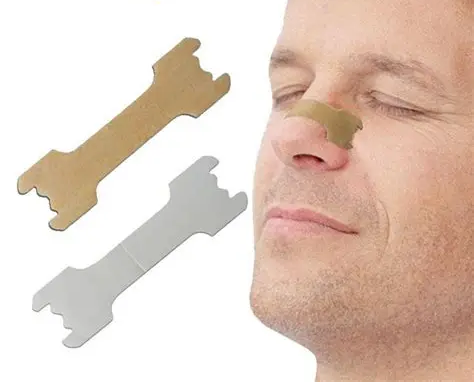
Scientific basis and user experience verification
Multiple studies have shown that decreased elasticity of nasal soft tissues with age is a significant factor contributing to breathing obstruction. Nasal strips provide additional physical support, improving airflow and alleviating minor blockages caused by soft tissue laxity. Meanwhile, user feedback indicates that individuals over 60 years old who use nasal strips experience deeper sleep at night, feel refreshed upon waking, and experience smoother breathing during light exercise and focused activities. This clearly demonstrates the practical value of nasal strips aging in addressing age-related changes in breathing.
For users who wish to systematically improve their daily breathing experience, they can refer to the [Daily Breathing Optimization Guide], which combines physical interventions with lifestyle adjustments to form a sustainable breathing management strategy.
Summary and Application Recommendations
In summary, as people age, the elasticity of nasal soft tissues decreases, airways gradually narrow, and respiratory regulation ability weakens, all of which affect breathing comfort in middle-aged and elderly individuals. Nasal strips offer a safe, non-pharmacological physical intervention that improves airflow by widening the nostrils and bridge of the nose, aiding sleep at night and extending into daytime activities and focused tasks.
Middle-aged and elderly users should pay attention to the following points when using it:
- Understanding physiological changes: Soft tissue relaxation and airway narrowing are natural aging processes.
- Use nasal strips properly: ensure accurate placement, use in various scenarios, and avoid excessive or forced stretching.
- Incorporate nose strips into your daily life: Try them during nighttime sleep, morning exercise, and focused tasks;
- Note the limitations: Severe structural problems require professional intervention, and nasal strips are an auxiliary rather than a panacea.
Through scientific understanding and proper application, nasal strips can not only improve nighttime breathing in middle-aged and elderly people but also enhance their quality of life, making breathing smoother and more energetic, thus providing tangible support for healthy aging.