
Many people face a familiar yet perplexing phenomenon: even with sufficient sleep, they still feel tired upon waking. This not only affects their daily mental state but also gradually accumulates negative health effects. Scientific research shows that sleep quality depends not only on sleep duration but also on nighttime breathing efficiency. The potential role of nasal strips in improving nighttime airway patency, reducing micro-arousals, and optimizing sleep recovery airflow is attracting increasing attention from users. This article will break down the common reasons for “getting enough sleep but still feeling tired” and reveal the indirect value of smooth breathing in improving morning recovery.
The relationship between nighttime breathing and morning fatigue
Even after lying in bed for eight hours or more, frequent nighttime awakenings, excessive light sleep cycles, or breathing obstruction can still lead to feeling tired upon waking. This phenomenon is usually caused by the following factors:
- Frequent micro-awakenings: When breathing resistance increases, the body will briefly wake up to restore airway patency. Although these micro-awakenings are not clearly remembered, they can affect the proportion of deep sleep.
- Insufficient oxygen supply: Decreased nasal patency leads to limited airflow and reduced oxygen absorption efficiency, especially during REM and deep sleep stages.
- Sympathetic nerve activity: Breathing resistance causes the sympathetic nerves to remain slightly active, preventing the body from fully relaxing and affecting the sense of recovery.
This mechanism explains that even if total sleep duration is normal, poor nighttime breathing quality can still lead to the experience of “waking up tired breathing.”
Physiological function of nasal strips
Nasal strips are to keep the nasal cavity open and reduce breathing resistance by physically pulling on the nasal ala or nasal valve area. When used at night, it can indirectly reduce morning fatigue associated with nasal strips, as follows:
- Increase airflow: By expanding the nasal cavity, airflow is increased, allowing for more adequate oxygen intake with each inhalation and improving oxygenation efficiency during deep sleep.
- Reduce micro-awakes: Clear nasal passages mean smooth breathing, fewer brief awakenings at night, and intact deep sleep and REM cycles.
- Optimized recovery: A stable oxygen supply during continuous sleep allows the body to recover energy more quickly upon waking, reducing fatigue upon waking.
It is important to note that nasal strips are not a panacea for fatigue but rather work by improving nighttime breathing efficiency and supporting sleep recovery, thus producing noticeable effects in the morning.
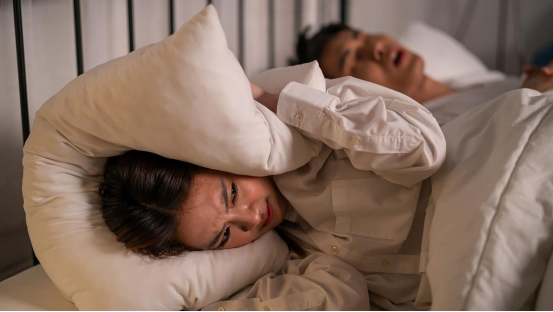
The delicate balance between micro-awakening and deep sleep
Nocturnal micro-awakening refers to a brief state of neural arousal, typically lasting from a few seconds to a minute. While it does not affect overall sleep duration, excessive frequency can compress deep sleep time.
Studies show that excessive light sleep or micro-awakening is associated with the following problems:
- Morning fatigue: The brain has not fully completed memory consolidation and energy restoration, resulting in a feeling of lethargy upon waking.
- Decreased cognitive efficiency: shorter attention span, reduced reaction speed, and work efficiency.
- Increased cardiovascular stress: Long-term sympathetic nerve activity causes abnormal fluctuations in heart rate at night, affecting overall recovery.
Nasal strips at night can reduce the frequency of micro-awakenings, allowing your body to fully recover during deep sleep and thus reducing morning fatigue.
The core logic of oxygen intake and sleep recovery
During deep sleep, the body relies on a stable oxygen supply to complete cell repair, regulate immune function, and rebuild energy reserves. If nasal congestion leads to insufficient airflow, oxygen intake decreases at night, weakening the body’s recovery efficiency.
Sleep recovery airflow includes:
- Keep your nasal passages clear: Breathe naturally or use aids such as nasal strips to help maintain a steady airflow.
- Adjust the sleep environment: Maintain moderate air humidity, avoid allergen stimulation, and further reduce breathing resistance.
- Train your breathing habits: Maintain nasal breathing during the day to make breathing natural and smooth at night, reducing dryness and mild congestion caused by mouth breathing.
This logic suggests that getting enough sleep does not equate to full recovery and that smooth breathing is a key mediator of deep sleep and a sense of recovery.

The indirect value of smooth breathing
Smooth breathing contributes to a greater sense of refreshment upon waking, not only by reducing fatigue but also by influencing cognitive and emotional states. Specifically:
- Improve focus and work efficiency: Feel refreshed upon waking up, reducing inefficient time in the morning.
- Improve your mood: Smooth breathing at night reduces the load on the sympathetic nervous system, resulting in less anxiety or irritability upon waking.
- Supports daytime vitality: adequate oxygen supply, more balanced metabolism and energy levels, and better performance in exercise and daily activities.
Therefore, the effect of nasal strips on morning fatigue is to indirectly improve the body’s overall sense of recovery and daytime energy by improving nighttime breathing efficiency.
Precautions in practical application
While nasal strips have potential value in assisting nighttime breathing and improving morning fatigue, caution should still be exercised when using them:
- Adaptation period: You may feel slight discomfort when using it for the first time, and you should gradually get used to it.
- Nighttime nasal condition: If allergies or rhinitis are present, environmental or nasal management should be carried out simultaneously to ensure significant results.
- Long-term observation: Recording morning fatigue, snoring, and the number of times you wake up at night can help assess the auxiliary value of nasal strips.
A well-designed nighttime support strategy can help users gradually experience improvements in waking up and tired breathing, thereby transforming smooth breathing into morning energy.
Nasal breathing awareness and long-term effects
In sleep optimization, relying solely on assistive tools has limited effectiveness; establishing a nasal breathing habit is equally important. Combining this with a phased strategy of using nasal strips at night can help users:
- Become aware of the importance of nasal breathing and gradually maintain it spontaneously.
- Maintain smooth airflow both day and night, reducing the tendency to breathe through the mouth.
- Through continuous monitoring and feedback, the sleep recovery airflow is optimized to form a stable recovery cycle.
This process emphasizes the long-term value of unobstructed breathing, rather than relying solely on patches as a one-time solution.
Conclusion
Morning fatigue is not simply determined by sleep duration but rather by a combination of factors, including nighttime breathing efficiency, the frequency of micro-awakes, and insufficient oxygen intake. Keeping the nasal passages clear using nasal strips can reduce micro-awakes, optimize airflow, and indirectly improve morning alertness. The value of this tool lies in supporting and strengthening nighttime breathing patterns, allowing the body to fully repair itself during sleep, thereby reducing fatigue upon waking.