
Modern life is fast-paced and stressful, leading many to habitually breathe through their mouths during the day or while sleeping. Prolonged mouth breathing not only affects sleep quality but can also cause dry mouth, throat discomfort, and respiratory dysfunction. To achieve a healthier breathing pattern, a gradual transition to nasal breathing is crucial. However, this shift is not instantaneous and requires scientific strategies and phased supportive tools. Nasal strips can play a supporting role in this process, helping users maintain airway patency at night or in specific situations, gradually establishing a nasal breathing habit, rather than simply serving as a standalone “solution.”
The Hidden Problems of Mouth Breathing and the Advantages of Nasal Breathing
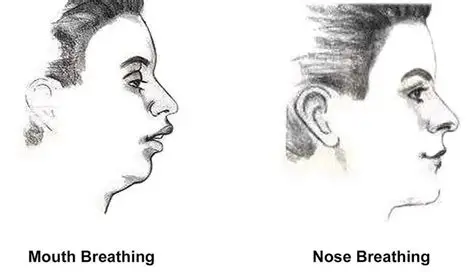
Mouth breathing usually stems from nasal congestion, breathing habits, or rapid breathing patterns under stress. Long-term mouth breathing can lead to the following problems:
- Dry air and impaired oral health: Air enters the respiratory tract directly through the mouth, lacking moisture and filtration, which can easily lead to dry mouth, bad breath, and sensitive gums.
- Decreased sleep quality: When breathing through the mouth, the tongue and pharyngeal muscles tend to droop, increasing airway resistance and potentially causing mild snoring or nighttime awakenings.
- Low breathing efficiency: The nasal cavity provides air conditioning and filtration functions. The lack of these functions will reduce the efficiency of oxygen absorption and increase the cardiovascular load.
Conversely, nasal breathing not only effectively filters and humidifies the air but also improves blood oxygen saturation by releasing nitric oxide (NO), thus optimizing sleep and daytime focus. Therefore, gradually transitioning from mouth breathing to nasal breathing is not only a physiological need but also a lifestyle optimization.
The role of nasal strips in respiratory migration
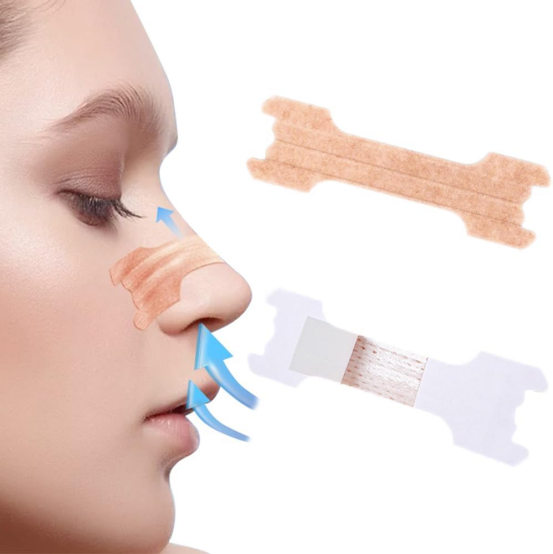
During the transition phase, users often tend to breathe through their mouths, especially at night or under stress. This is where the value of nasal strips for mouth-breathing transition becomes apparent. By gently pulling on the nostrils and nasal valve area, nasal strips can keep the nasal passages open, reduce the urge to breathe through the mouth, and provide an immediate sense of airflow.
It’s important to understand that nasal strips are not meant to create permanent dependence but rather to serve as a phased tool to help establish awareness of nasal breathing. Through several weeks or months of nighttime assistance, users will gradually develop the ability to consciously maintain nasal breathing both awake and asleep. This “physical-psychological” approach significantly improves the efficiency of airflow correction, rather than simply providing temporary relief for the airway.
Phased transition strategy
The following phased strategies can be used to transition from mouth breathing to nasal breathing:
1. Consciousness Cultivation Stage
During the day, practice nasal breathing exercises using a breathing monitor or simple reminders to focus your attention on inhaling through your nose and exhaling through your mouth. This stage can be combined with nasal strips to help keep the airway open during sleep at night, allowing the body to establish a conditioned reflex of “nasal breathing.”
- Practice method: Take a deep breath and exhale slowly through your nose, gradually increasing the duration of inhalation and exhalation.
- Tool assistance: Apply nasal strips at night to reduce the tendency to breathe through the mouth, while also being aware of changes in airflow.
2. Nighttime Breathing Enhancement Phase
While daytime conscious training has gradually taken hold, nighttime remains crucial. Using daily nasal strips helps keep the nasal passages naturally open at night, reducing snoring and slight breathing resistance, allowing nasal breathing to become the dominant sleep pattern.
- Observation indicators: reduced dry mouth upon waking at night, reduced snoring, and improved sleep continuity.
- Phase goal: To establish a sleep nasal breathing habit through continuous use of nasal strips, rather than relying on the strips themselves.
3. Self-regulation and reduction phase
After a period of nasal breathing training, users can gradually reduce the frequency of nasal strip use, for example, by using them overnight or only when there is severe nasal congestion. This stage is crucial for separating psychological and physical dependence, allowing nasal breathing to become a natural habit without relying on external assistance.
- Training method: Use conscious reminders or a mild mouth and nose breathing monitoring device to observe the maintenance of nasal breathing.
- Adjustment strategy: Arrange the use of nasal strips flexibly according to the sense of airflow and breathing comfort.
Common Challenges and Solutions
During the transition, users may face the following challenges:
- Initial discomfort with nasal breathing:
Some users may experience increased resistance or mild dizziness when attempting nasal breathing. This is a normal reaction of the nasal cavity adapting to changes in airflow. Using nasal strips at night can alleviate resistance and allow the body to gradually adapt. - Psychological resistance
can arise from a long-standing habit of mouth breathing, which may create a “comfort zone” where users may initially feel tense or anxious when actively breathing through their nose. Nasal strips provide physical feedback during the mouth-breathing transition, allowing users to perceive the natural comfort of nasal breathing and reducing psychological resistance. - Environmental factors such as
Dry air, allergens, or seasonal rhinitis can affect the transition progress. Using air humidification, proper nasal cleaning, and periodic nasal strips can help maintain training continuity.
Long-term maintenance of nasal breathing habit
The ultimate goal is not just to complete the transition but to make nasal breathing a spontaneous habit. By combining mindfulness training, nighttime aids, and an optimized living environment, users can achieve the following benefits:
- Improved breathing efficiency: The nasal cavity’s filtering and humidifying functions are fully utilized, resulting in more efficient oxygen absorption.
- Improved sleep quality: Nighttime snoring decreases, sleep continuity improves, and morning dry mouth is significantly reduced.
- Optimize your lifestyle: Nasal breathing helps reduce stress and anxiety and improves overall cardiopulmonary function.
Maintaining a nasal breathing habit long-term depends not only on physical aids but more importantly on both psychological and physiological adaptation.
Conclusion
The transition from mouth breathing to nasal breathing is a gradual and manageable process. Nasal strips play a phased role in this process, using physical traction to help keep the nasal passages clear, reduce the tendency to breathe through the mouth at night, and provide immediate feedback for conscious training. Through a phased strategy and long-term habit establishment, users can achieve a healthy and sustainable shift in their breathing patterns without relying on a single solution.